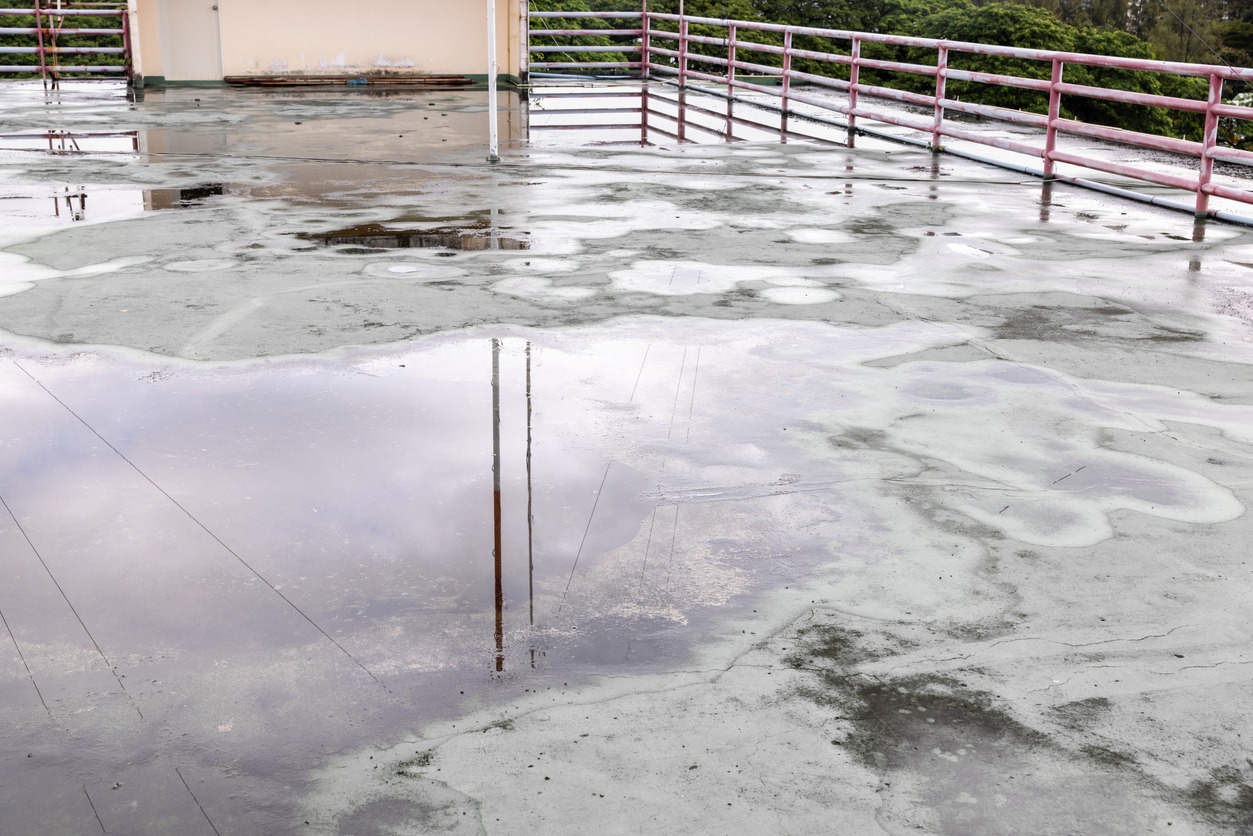
Flat roofs are a common sight on both commercial and residential structures, offering a modern look and practical space for HVAC units or even rooftop patios. However, with their minimal pitch, flat roofs are particularly vulnerable to one notorious issue: standing water. Even a relatively shallow pool of water that lingers after rainfall can lead to severe problems if left unchecked.
How Standing Water Develops on Flat Roofs
After a heavy rainstorm, you might notice puddles forming on your roof. While some water will naturally evaporate or drain, consistent areas of standing water, which is defined as water that remains 48 hours after precipitation, signal possible trouble. This often occurs due to:
-
Clogged or insufficient drains and gutters
-
Aging or sagging roof structures
-
Poor initial design or installation
-
Build-up of debris, such as pine needles and leaves
The local climate in Dallas and the greater Paulding County area means that seasonal rains, spring storms, and lingering humidity can all contribute to standing water concerns and accelerate roof wear.
Why Standing Water Threatens Roof Longevity
Many property owners underestimate the risks of letting water accumulate on their flat roof. Persistent standing water can:
-
Accelerate deterioration of roofing materials, leading to blisters, cracks, and leaks
-
Undermine membrane seams and adhesives, allowing water to infiltrate the underlying structure
-
Encourage algae and mold growth, further harming both the roof and your building’s interior air quality
-
Add excessive weight, which over time can strain the structural integrity of your roof supports
For flat roofs in Georgia’s variable climate, these issues can ultimately result in premature failure unless promptly addressed by professionals.
Common Warning Signs You Should Watch For
Being vigilant is key to maintaining your flat roof’s performance. Here are some signs you shouldn’t ignore:
-
Water spots or wet patches inside, especially after storms
-
Pooled water visible more than two days after rain
-
Plant or moss growth on the roof surface
-
Sagging or uneven roof areas
If you spot any of these indicators, it’s wise to act swiftly. Local roofing professionals can inspect conditions and determine whether you need basic drainage repairs or a more comprehensive flat roof replacement.
Addressing and Preventing Standing Water
Proactive property owners can help limit the risk of standing water causing major damage by:
-
Keeping drains, gutters, and scuppers clean and clear of debris
-
Scheduling regular roof inspections through a trusted local roofing service
-
Removing heavy snow or storm debris as soon as weather allows
-
Investing in professional roof repair to address minor problems before they escalate
Routine maintenance plays a critical role in extending the lifespan of your roof, especially when it’s backed by expert workmanship and local knowledge.
Contact Raymond’s Roofing LLC for Flat Roof Solutions in Dallas, GA
If you’re dealing with standing water or notice any other flat roof concerns, Raymond’s Roofing LLC is here to help. Our team understands the challenges specific to Dallas, GA’s weather patterns—spring storms, summer humidity, and the occasional winter freeze. We offer prompt roof inspection services, repairs, and total replacements tailored to your property’s needs. Call us today at (706) 400-4111 or fill out our online form to schedule a consultation and keep your roof in top condition.